
Probate Belongs in Tippah County Chancery Court
Mississippi does not run a separate probate court. The work that other states label probate falls to Chancery Court, the court of equity. In Tippah County, that means estates, wills, guardianships, conservatorships, mental health commitments, and many land-title questions all move through the same court. The county Chancery Court handles estates of decedents, insurance settlements paid to minors, emancipation, and disputes over property. So a will or an estate file will never sit in Circuit Court.
The Chancery Clerk keeps these records and acts as the court's recordkeeper. Shana Lowry holds that office today. Her duties also cover deeds, mortgages, and other land instruments, which often tie back to estate matters. On the bench, Tippah sits in the 18th Chancery District, a five-county district that also serves Benton, Calhoun, Lafayette, and Marshall counties. Two chancellors, Lawrence L. Little and Robert Q. Whitwell, hear cases across the district.
Most estate dockets are open to the public. Sealed and sensitive files are the exception, not the rule.
Probate Terms Defined
Probate filings are full of old legal words. A short glossary helps before you open a case file or read a docket. The terms below show up across most Tippah County estate and guardianship matters.
- Testator
- The person who made the will. A testator names who should inherit and who should manage the estate.
- Executor
- The person named in a will to carry it out. The court issues letters that give the executor authority to act.
- Intestate
- Dying without a valid will. State law then sets who inherits and in what share.
- Guardianship
- A Chancery proceeding that appoints someone to care for a minor or an incapacitated person.
- Conservatorship
- A Chancery proceeding that lets an appointed person manage the finances and property of someone unable to do so.
- Muniment of title
- A short path to clear real estate through a will when full estate administration is not needed.
- Heirship
- A court action that decides who the legal heirs are when no will settles the question.
Tippah County Chancery Clerk and Court
Two addresses matter for probate work in Ripley, and they do not match in the official sources. The Chancery Clerk is listed at 115 E Spring Street, while the 18th Chancery District lists a separate Chancery Court Building at 207 North Commerce Street. File requests and record copies go through the clerk. Hearings may be set at either location, so confirm the room before you drive in.
Tippah County Chancery Clerk
Shana Lowry, Chancery Clerk
115 E Spring Street
Ripley, MS 38663
662-837-7374
Fax: 662-837-7148
Hours: call to confirm
Chancery Court Building (18th District)
Tippah County Chancery Court Building
207 North Commerce Street
Ripley, MS 38663
Chancellors: Larry Little, Robert Q. Whitwell
Hours: call to confirm
Important: The clerk address at 115 E Spring Street and the district court building at 207 North Commerce Street do not agree in official listings. Call the Chancery Clerk to confirm where to file and where your hearing will be heard.
The clerk's office also covers divorce, custody, and adoption. If your search touches a family case as well as an estate, the marriage and divorce records page covers that side. A broader look at the office and its duties sits on the Chancery Clerk page.
How to Search Tippah County Probate Records
Estate records have more than one access channel. The online index is the fastest first stop, but it is not the official copy and it does not reach old files. The clerk counter, the district court site, and the county archives fill the gaps. Start online, then move to the office when the index falls short.
The county uses a vendor-hosted index from Delta Computer Systems for Chancery cases filed from 2000 to the present. Access runs on a paid subscription. The system warns that the courthouse record is the official one and that online data may lag.
- Open the Delta Chancery Court case search for Tippah County and sign in to a subscription.
- Search by party name, case number, filed date, final disposition date, docket book and page, or file number.
- For a name search, turn on refinements to narrow by a filing date range and by nature of action, such as Testate Estate or Guardianship.
- If you find no hit, call or visit the Chancery Clerk, since older or non-digitized estates only exist at the counter.
- For historic estates, check the Tippah County Archives and the state finding aids described further down this page.
Note: The online index covers Chancery cases back to 2000 only, so any estate settled before that year must be traced through the clerk or the county archives.
Probate Search Fields
The Chancery case search offers several entry points, plus extra filters once you search by name. The nature-of-action list is unusually detailed, which helps because Chancery mixes estate, family, equity, and commitment matters in one index. The fields below are the ones a probate searcher uses most.
| Field | Type | Notes |
|---|---|---|
| Party Name (last, first) | Text | Name search; refinements apply only to name searches. |
| Case Number | Text | Direct lookup of a known case. |
| Filed Date | Date | Finds cases opened on a given date. |
| Final Disposition Date | Date | Finds cases closed on a given date. |
| Docket (Book/Page) | Text | Locates a case by its book and page entry. |
| File Number | Text | Alternative direct lookup. |
| Nature of Action | Dropdown | Probate options include Testate Estate, Intestate Estate, Will Contest, Muniment of Title, Heirship, Guardianship, Conservatorship, Minor's Settlement, Accounting, and Commitment. |
Estate Types in Tippah County Probate
Not every estate moves through the court the same way. The right path depends on whether there is a will, what the estate owns, and who the heirs are. The nature-of-action menu in the Chancery index mirrors these categories, which makes it easier to find the file you want.
- Testate estate: the decedent left a valid will, and the court admits it and appoints an executor.
- Intestate estate: no will exists, so state law sets the heirs and the court names an administrator.
- Muniment of title: a will exists and the main asset is land, so the court clears title without full administration.
- Heirship: the court determines the legal heirs when ownership is in question.
- Accounting: the fiduciary reports receipts, payments, and the proposed distribution to the court.
Muniment of title and heirship both lean heavily on land records, because the goal is to fix who owns real property. The Chancery Clerk records the deeds and instruments that prove that chain of title, and you can preview the Tippah deeds and land records search to see how property filings are indexed.
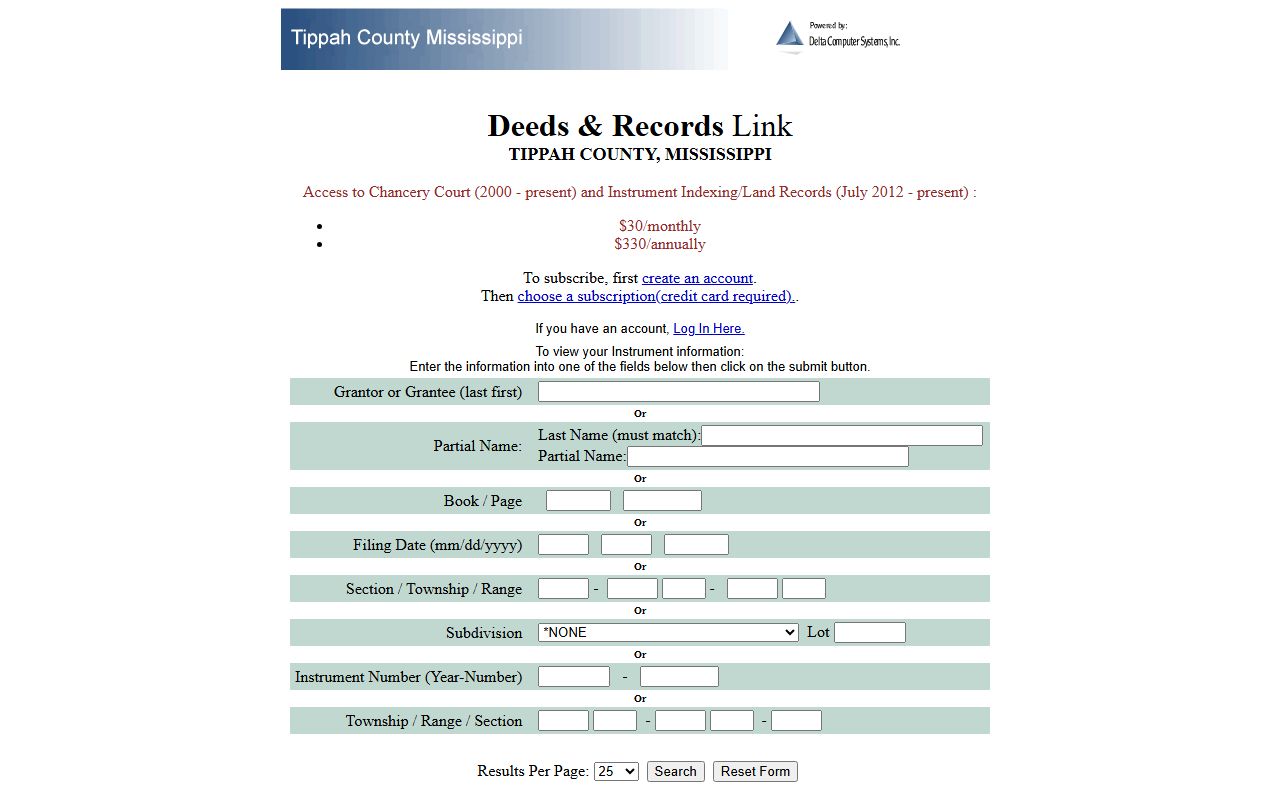
That land index sits beside the estate docket, so a muniment of title case and the deed it produces can both be traced through the clerk. Together they show how Tippah probate work and property records overlap.
Guardianship, Conservatorship, and Minor Settlements
Chancery Court does more than close out estates. It also protects people who cannot manage their own affairs. A guardianship places a minor or an incapacitated adult in the care of an appointed person. A conservatorship hands an appointed person control of someone's money and property when that person can no longer handle it safely.
Minor settlements are a related Chancery duty. When a child receives money from an insurance payout or a legal claim, the court reviews and approves how those funds are held and spent. The county Chancery Court page lists insurance settlements to minors among its core matters. Commitments of persons of unsound mind also run through this court.
These files often carry health and financial detail, so parts may be sealed or redacted. Public access to the docket does not always mean access to every document inside it.
Note: Guardianship, conservatorship, minor settlement, and commitment files may be restricted because they hold medical and financial facts about a protected person.
Filing an Estate in Tippah County
Opening an estate is a step-by-step process before the Chancery Court. The exact path depends on whether there is a will and whether the assets need full administration. Official local probate forms were not posted on the county site, so the clerk and the 18th Chancery District are the places to confirm what each case needs. The district site does publish general Chancery forms, calendars, and orders.
- Decide whether the decedent left a will and whether the assets require Chancery administration.
- Contact the Chancery Clerk about local filing requirements, fees, and whether an attorney is needed.
- File the right probate petition or application in Chancery Court, using 18th Chancery District forms where they fit.
- Pay the filing fee set by the clerk at the time of filing.
- Attend any Chancery hearing and obtain the letters or order that name the fiduciary.
- Give creditor and heir notices in the manner the court orders.
- File the inventory, accountings, and other required papers.
- Resolve claims, distribute assets, transfer property if allowed, and close the estate by final order.
Probate Filing Fees
Tippah County does not publish a probate fee schedule on its official pages. The only firm online figure tied to records access is the Delta subscription. Local filing and copy charges are set at the counter, so call the Chancery Clerk for a current quote before you file or order copies. The table lists the researched figures and marks the rest as not published.
| Item | Amount |
|---|---|
| Delta Chancery case index, monthly | $30 |
| Delta Chancery case index, annual | $330 |
| Local probate filing fee | Not published online; call the clerk |
| Certified or plain copy fee | Not published online; call the clerk |
| Public-records copy cost | Actual cost set by state law |
Under the Mississippi Public Records Act, a public body may charge the actual cost of searching, copying, and mailing a record. The Public Records Act text spells out those limits, though court files may also follow court rules and sealing orders.
Older Tippah County Probate Records
The online index only reaches back to 2000, but Tippah estates were filed long before that. The county's record history runs into the 1800s, and those papers survive through archive channels rather than a database. Two state programs preserve and describe them.
The Tippah County Archives, hosted through the Mississippi Digital Library, preserves county government records for research and education. You can browse the Tippah County Archives collection to see what has been digitized.

The collection includes Chancery Court records, Circuit Court records, supervisor minutes, and tax assessor records. For probate, the Chancery materials are the ones to look for. A second resource describes original records in even more depth.
The Mississippi Department of Archives and History maintains a detailed finding aid for Tippah's original records. Review the MDAH finding aid for Tippah County to locate nineteenth-century court files.
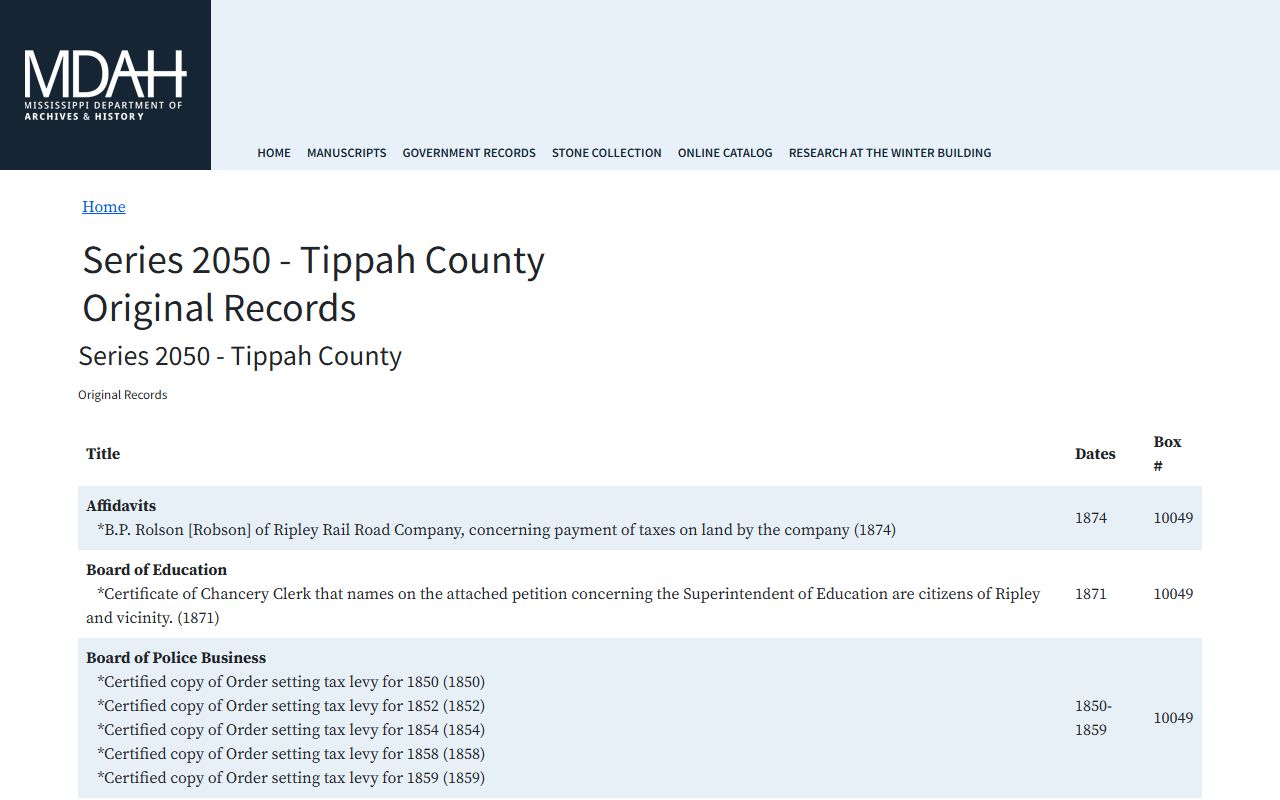
That finding aid lists Chancery Clerk materials alongside Circuit Court complaint papers, grand jury records, and indictments. It confirms that estate and equity files have long formed their own record stream in the county.
Restricted Tippah County Probate Records
Most estate dockets are open, but several Chancery matters are not. Guardianship and conservatorship files, minor settlements, commitments, and any adoption-linked case may be sealed or heavily redacted. The reason is simple: these files hold medical, financial, and personal facts about people the court is protecting.
Adoption records carry their own confidentiality, and youth court files are sealed by statute. Even in an open estate file, the clerk may redact Social Security numbers, account numbers, and the identities of minors. Public access to a case does not guarantee access to every page inside it.
State law draws the lines here. You can navigate the official Mississippi Code public access portal to read the confidentiality and records statutes in full.
When a record is restricted, the clerk decides what may be released and what must stay closed. If a file you need is sealed, ask the clerk what is public and whether a court order is required for the rest.