
No Online Warrant List for Tippah County
There is no official Tippah County online warrant lookup. The Sheriff's website does not post an active-warrant search, and no most-wanted list was found there. The county also has no official Sheriff or police mobile app that would carry such a tool. So an online search of a county database is not an option here. The work happens by phone or in person, through the office that holds the warrant.
That fallback chain is short and clear. Start with the Sheriff, who serves as the county's main law-enforcement agency and jailor. Then check the court that issued the order, because bench warrants and capias paperwork live with the issuing court. For tips, Crime Stoppers takes anonymous calls. For federal matters, the U.S. Marshals handle warrants in this district. Each step has a real phone number and a clear purpose.
Active warrant detail can also be limited by law. The Mississippi Public Records Act keeps incident reports public but exempts law-enforcement investigative reports. An office may hold back parts of an open warrant when release would harm an arrest or public safety. So the answer you get may be a yes-or-no on whether an order exists, plus instructions, rather than a full file.
No online lookup: Tippah County has no public warrant database or most-wanted page. Confirm any warrant directly with the Sheriff or the court that issued it.
Tippah County Warrant Search Channels
Because no single portal lists warrants, the right contact depends on the case behind the order. County tickets and misdemeanors route one way, felony cases another, and family or support matters a third. The table below maps each channel to what it covers and how to reach it. Use it to pick the office most likely to hold a given warrant before you start calling.
| Channel | Use For | Contact |
|---|---|---|
| Tippah County Sheriff | Arrest warrants, jail holds, local law-enforcement warrant questions | 205 West Spring Street, Ripley; 662-837-9336 |
| Justice Court | County traffic, DUI, misdemeanors, initial felony proceedings, failure to appear | 205-B West Spring Street; 662-837-8842 |
| Ripley Municipal Court | City traffic and misdemeanor failure to appear, city warrants | 662-837-3659; third-Thursday docket |
| Circuit Clerk / Circuit Court | Felony cases, Circuit capias, appeals, criminal docket status | 101 E Spring Street; 662-837-7370 |
| Chancery Clerk / Chancery Court | Contempt, domestic, child-support, probate and equity orders | 115 E Spring Street; 662-837-7374 |
| DPS Crime Stoppers | Anonymous tips, not personal warrant clearance | 1-888-8CRIMES |
| Federal warrants | Federal fugitive and warrant matters | U.S. Marshals, Oxford; 662-513-2300 |
Call the Tippah County Sheriff About Warrants
The Sheriff is the first call for most local warrants. Sheriff Karl Gaillard leads the office, which keeps the peace across the county and runs the county jail. The Sheriff is the county jailor and keeps a jail docket, so deputies know who is in custody and what holds apply. If a deputy is the one carrying an active arrest warrant, this office is where it sits.
Call or visit and ask plain questions. Is there a warrant under a given name? Is bond set, and how much? Where must a person surrender, and what should they bring? Staff can confirm a local warrant and explain the next step. If the person is already booked into the jail, ask about any hold or detainer, which can affect release.
Tippah County Sheriff's Office
205 West Spring Street
Ripley, MS 38663
662-837-9336
Fax: 662-837-1191
Booking detail and current custody status are covered more fully on the Tippah County inmate records page, since the Sheriff is the same office that runs the jail.
Tippah Justice and Municipal Bench Warrants
Many local warrants are bench warrants, issued by a judge when someone misses court or ignores a court order. In Tippah County these most often come out of two lower courts. Justice Court handles county and State Highway Patrol traffic tickets, DUI, county ordinance cases, small civil matters, and the first stage of felony cases. Its judges hold sessions at the jail three times each week so that anyone arrested gets an initial appearance within three days. A missed Justice Court date can trigger a bench warrant or a capias.
Ripley Municipal Court handles city citations and misdemeanors for the City of Ripley. It meets on the third Thursday of each month at 9:00 a.m. in the courthouse. Some traffic and misdemeanor charges allow a standard fine to be paid, while others require a mandatory court appearance. Skipping a required appearance is a common path to a city bench warrant.
Common reasons a lower-court bench warrant gets issued in Tippah County include:
- Failure to appear for a scheduled court date
- Failure to pay a fine or follow a payment plan
- Missing a mandatory-appearance traffic or misdemeanor hearing
- Violating a condition the judge set in an earlier order
Note: A standard fine can sometimes clear a minor citation, but mandatory-appearance offenses require facing the judge, so confirm which rule applies before you pay.
Circuit Capias and Felony Warrants in Tippah County
Felony cases run through Circuit Court, and the warrant paperwork tied to them is kept by the Circuit Clerk. Circuit Clerk Phil Koon files indictments, criminal process, and the orders that follow a grand jury action. When a felony defendant fails to appear or a grand jury returns an indictment, the court can issue a capias, which is a warrant directing officers to bring the person before the court.
To check a felony warrant or capias, contact the Circuit Clerk's office and ask about the criminal docket for the named person. Staff can tell you whether an order is outstanding and how it should be handled. Felony surrender and bond often involve an attorney, because the stakes and the process are heavier than a traffic matter.
The full felony case file, including charges, pleas, and sentencing, is described on the Tippah County criminal court records page. The capias is only one piece of that larger case.
Tippah County Chancery Contempt Warrants
Not every warrant comes from a criminal case. Chancery Court handles divorce, custody, child support, guardianships, and other equity matters. When a party disobeys a Chancery order, the court can find that person in contempt and issue a warrant to compel compliance or appearance. Child-support enforcement is a frequent source of these orders.
Chancery Clerk Shana Lowry keeps the records for these cases. If a warrant or contempt citation may stem from a support, custody, or domestic order, the Chancery Clerk's office is the place to ask. Because Tippah sits in the 18th Chancery District, a hearing location may differ from the clerk's office, so confirm where to appear when you call.
Note: Contempt warrants in Chancery cases usually aim to enforce an order such as unpaid support, so resolving the underlying obligation is often part of clearing the warrant.
How Mississippi Warrants Work
A warrant is a court order, not a police decision. The Mississippi Bar describes an arrest warrant as a judicial order that authorizes an officer to make an arrest. A judge or other judicial officer reviews the request and signs the order before officers act on it. That judicial step is what separates a warrant from an ordinary stop or detention.
Officers do not always need a warrant. The Bar explains that a warrant may not be required when a crime is in progress, a suspect is fleeing, or justice would fail without immediate action. Mississippi Code Section 99-3-7 sets out when a warrantless arrest is allowed, including certain felonies, breaches of the peace, and domestic-violence or protection-order situations. The terms below come up most often in Tippah County warrant questions.
- Arrest warrant
- A judge's order authorizing officers to arrest a named person for a charged offense.
- Bench warrant
- An order a judge issues from the bench, usually for missing court or disobeying a court order.
- Capias
- A warrant directing officers to take a person into custody and bring them before the court, common in felony and failure-to-appear cases.
- Search warrant
- A judicial order allowing officers to search a described place for specific evidence, separate from an arrest order.
What a Tippah County Warrant Record Shows
A warrant record gathers the details an officer or clerk needs to act on the order. The exact fields vary by court and charge, and an open warrant may show less than a closed one. When you reach the issuing office, the items below are the kind of information a warrant record may include.
| Field | What It Shows |
|---|---|
| Person Name | The defendant or subject the warrant names |
| Issuing Court | Which court signed the order, such as Justice, Municipal, Circuit, or Chancery |
| Warrant or Capias Number | The unique number assigned to the order |
| Underlying Case or Citation Number | The case or ticket the warrant grows out of |
| Charge or Basis | The offense or the missed-court reason behind the order |
| Bond Status | Whether bond is set, the amount, or a no-bond hold |
| Date Issued | When the court signed the warrant |
| Law-Enforcement Agency | The agency assigned to serve the order |
| Court Date or Clearance Steps | Any appearance date or instructions to clear the warrant |
| Hold or Detainer | Custody-hold detail if the person is already in jail |
Federal Warrants in North Mississippi
Some warrants are not county business at all. Federal warrants and fugitive matters run through the U.S. Marshals Service for the Northern District of Mississippi, which is based in Oxford. The district's prosecutors work out of the U.S. Attorney's Office for the Northern District of Mississippi, which represents the federal government in these cases.
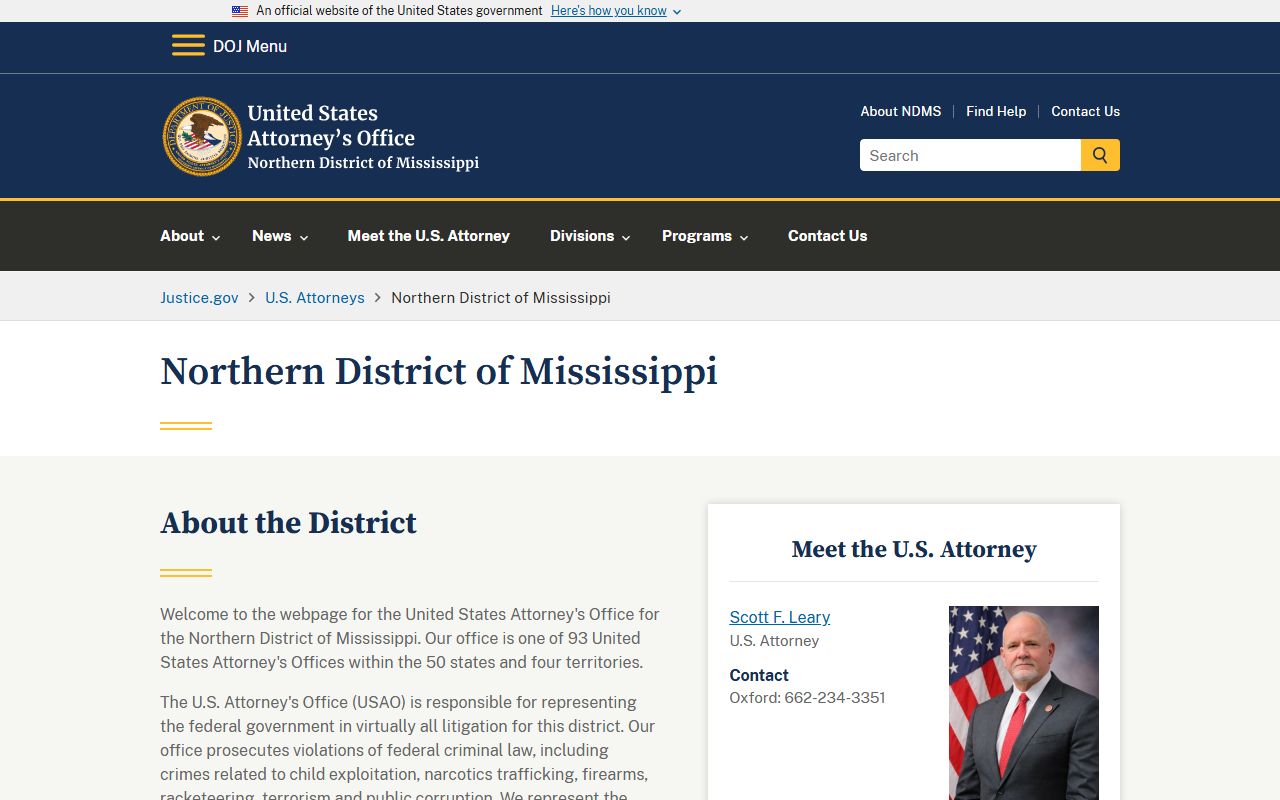
The U.S. Attorney's office and the Marshals handle prosecutions and warrants that fall under federal law, which is a separate track from Tippah County's Sheriff and state courts. For a federal warrant question tied to Tippah County, the Marshals office in Oxford can be reached at 662-513-2300. County offices cannot clear a federal order.
Crime Stoppers and Anonymous Tips
Crime Stoppers is a tip line, not a way to clear your own warrant. The Mississippi Department of Public Safety runs DPS Crime Stoppers at 1-888-8CRIMES, where callers can report a wanted person or pass along information without giving their name. Tips can support an arrest, and some programs offer rewards.
If the warrant is your own, this is the wrong door. Crime Stoppers cannot recall an order, set bond, or confirm your court date. For that, go back to the Sheriff or the issuing court. Use the tip line only to report information about someone else.
How to Resolve a Tippah County Warrant
Clearing a warrant is a step-by-step process, and skipping ahead can make things worse. The goal is to confirm the order with an official source, understand the conditions, and then take the right action through the proper office. The steps below follow the path most Tippah County warrants take.
- Do not rely on unofficial warrant websites. Start with the issuing court or the Sheriff's office.
- Call the likely court: Justice Court for county tickets, DUI, and misdemeanors; Municipal Court for Ripley city citations; the Circuit Clerk for felony Circuit matters; the Chancery Clerk for contempt, domestic, or support matters.
- Ask whether a warrant or capias exists, whether bond is set, whether a court appearance is mandatory, and whether payment alone can clear it.
- If the warrant is active, ask whether surrender happens at the Sheriff's office or jail, in court, or through an attorney's motion.
- For traffic or city matters, ask whether a standard fine may be paid or whether the offense requires a mandatory appearance.
- After payment, appearance, dismissal, or recall, confirm with the issuing court that the warrant has been cleared, and with the Sheriff if law enforcement held it.
Important: Talk to a lawyer before you surrender on a felony or serious charge, since an attorney can arrange bond, file motions, and protect your rights.